
Finding Idaho Falls Residents
Begin with the question, not a broad name query. A hunt for a current owner belongs in Bonneville County's parcel and recorder systems. A lawsuit name belongs in Idaho iCourt. Family history may call for city directories, newspapers, cemetery files, and census records. Each source captures a role at one moment. An owner may live elsewhere. A deed party may be a trustee. A court party is not automatically an Idaho Falls resident, so weigh each find before trusting it.
Normalize the name or address first. Keep former surnames, initials, street directionals, unit numbers, and likely years in separate notes. Idaho Falls was Eagle Rock before 1891. Bonneville County did not exist until 1911. Either change can explain an empty modern search. Save the source, the date checked, any instrument or case number, and whether the result is an index, image, map, or transcription.
- Enter a normalized address in the Bonneville County Parcel Viewer and save its parcel ID.
- Use Vote Idaho only for the limited voter fields the state makes public.
- Search the Recorder by parcel, situs, grantor, or grantee and note the instrument number.
- For an older person, check directories, newspapers, cemetery files, and maps for the same year.
- Confirm a name with a dated location or event in a second independent record.
The order can change with the question. A known case number should go straight to iCourt. A burial question should begin with Rose Hill or Fielding Memorial records. A current phone number can separate two candidates, but it is not proof of residence. Mark every match exact, probable, or unresolved.
Idaho Falls Records Offices
Custody splits by function. The Bonneville County Recorder keeps land instruments, while the Assessor and Platting & Mapping offices hold the parcel context. County Elections handles voter rolls. The Idaho Falls City Clerk routes municipal requests, and state courts plus Idaho Health and Welfare keep their own indexes or certificates. Call the keeper first. A phone call can save a trip when an online screen lacks the year or image you need.
Bonneville County Recorder
605 N Capital Avenue
Idaho Falls, ID 83402
208-529-1350
The Recorder counter sits on the courthouse second floor and accepts mailed copy requests. Mapping and assessment questions go to Constitution Way. Non-posted city records flow through the City Clerk or JustFOIA.
Idaho Falls Parcel Clues
The Bonneville County Parcel Viewer accepts a parcel number, name, or situs address. A situs address is the physical spot. It may differ from the owner's mailing address. Note the parcel number, the map date, and whether the lot lies inside city limits. The county cautions that the map settles neither ownership nor boundaries and leaves easements unmapped.
| Search field | Best use | Limit |
|---|---|---|
| Parcel number | Links assessment and map context | Not a deed |
| Name | Finds an assessment owner card | May be a trust or estate |
| Situs address | Locates the physical parcel | May differ from mail |
Requests covering more than three parcels route through JustFOIA under county guidance. The city and county GIS layers can also show whether an Idaho Falls postal address sits inside the legal city boundary.
Bonneville Deed Directory Fields
The Official Records Search is the strongest name-to-property index in the Idaho Falls residents directory workflow, with coverage reaching back to January 1, 1911. For records before 1995, the portal advises searching by name, instrument number, or book and page rather than recording dates.
| Field | Format or purpose | Requirement |
|---|---|---|
| Both Names | Individual as Last First, organization as filed | Not stated |
| Grantor / Grantee | Person giving or receiving an interest | Not stated |
| Instrument; Book; Page | Known document identifier | Not stated |
| Parcel ID; Situs | Address-keyed search | Not stated |
| Subdivision, Lot, Block | Legal-place search | Not stated |
An index hit is not the instrument itself. Images can be unavailable. Record the identifier and request a copy at the Recorder counter or by mail. Copies cost one dollar per page. Certification adds one dollar per document. Large plats or surveys cost five dollars.
Requesting Idaho Falls Records
Many municipal files have no public name index. The Idaho Falls JustFOIA portal routes city requests. A written request can also reach the City Clerk at 308 Constitution Way, by email at IFClerk@idahofallsidaho.gov, or by fax at 208-612-8560. State and county records use separate channels.
Describe the record, department, subject, and date range. The city usually gives an initial response within three business days. Work beyond two staff hours or 100 pages may require an advance fee. Idaho's public-records framework sits in Idaho Code sections 74-101 through 74-126, though exemptions and redactions still apply.
When a portal fails, try the counter, phone, mail, or archive. Court files may need the courthouse clerk or kiosk. Older gaps lead to Idaho Falls Public Library, the State Historical Society, BYU-Idaho archives, or FamilySearch. Open Bonneville County's records routing page to see where a current request begins.
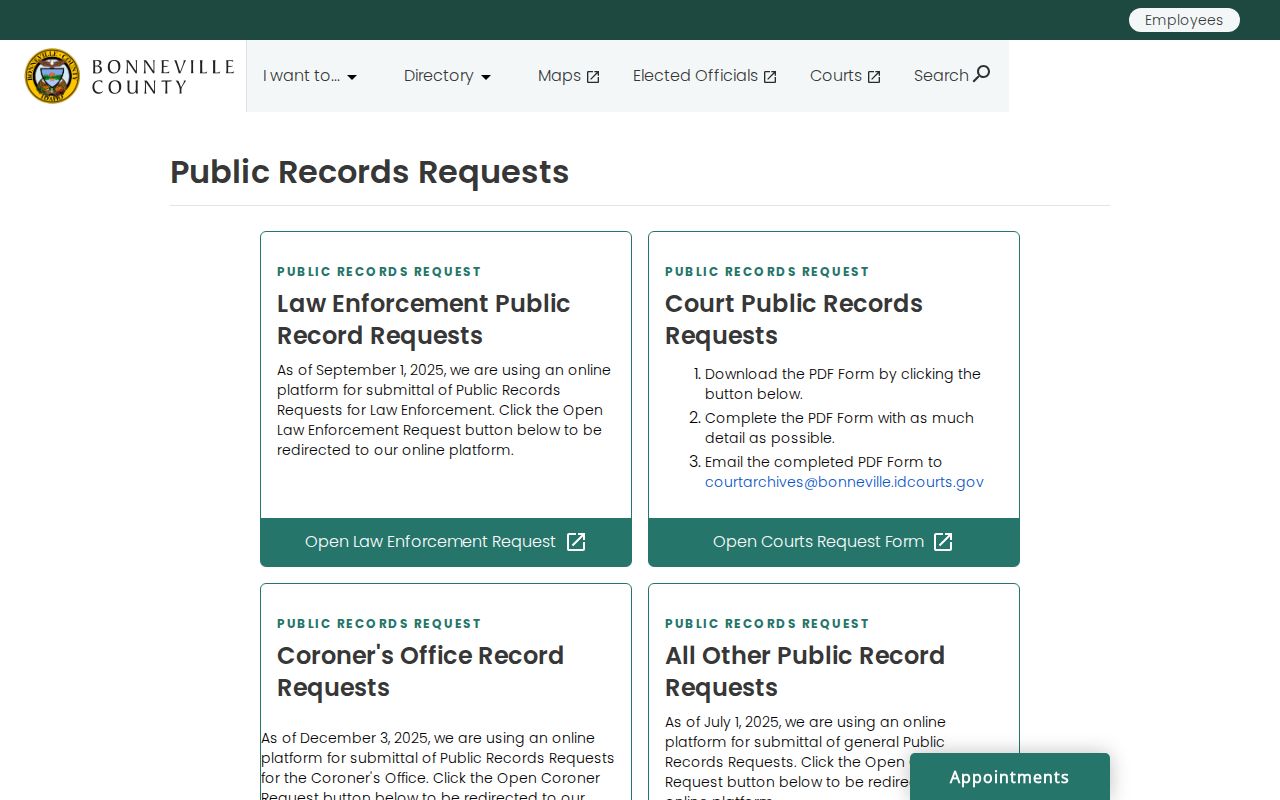
The county page separates ordinary county requests from court and law-enforcement channels.
Idaho Falls Court Name Checks
The Idaho iCourt Portal offers Smart Search and Search Hearings. Smart Search works with a case number, a party name in Last, First form, or a business name. It also accepts wildcards and advanced filters. Hearing searches can add county, hearing type, date range, attorney, or judicial officer. Results may show a case number, location, parties, events, and summary data.
The party role matters. The name may belong to a plaintiff, defendant, attorney, witness, victim, or business. A hit proves neither Idaho Falls residence nor a final disposition. Sealed, protected, and exempt files never appear. When the public portal omits a filing or image, use the Bonneville courthouse clerk. The court archive channel is another option.
Keep the identifier. Save the case number and retrieval date before leaving a dynamic result screen.
Idaho Falls Voter Boundaries
Idaho's Vote Idaho search answers narrow statutory questions, not household ones. What the public can see includes a voter's name, street or mailing address, county, gender, age, phone if the voter supplied it, party, and whether elections were voted in. The rest stays sealed. Date of birth, driver-license digits, Social Security numbers, signatures, and the physical voter card never become public record.
Some Idaho Falls residents register through the Address Confidentiality Program. It gives eligible survivors a substitute address, mail forwarding, and confidential registration. Never try to piece a protected location together from separate directory sources. When the JavaScript search fails to load, Bonneville County Elections staff will help. Reach them by phone, email, or at the counter.
Lawful personal use. Open records must never be used to stalk, harass, intimidate, or compile prohibited contact lists.
Idaho Falls Vital Events
Idaho Health and Welfare Vital Records keeps the state's certificates. Births from July 1911 stay confidential for a century. Death, stillbirth, miscarriage, marriage, and divorce certificates carry roughly 50-year windows. A current certified copy requires proof of identity and a direct, tangible interest.
Orders go through the state's online or mail channel. There is no walk-in counter for certified certificates, and county offices cannot issue them. One distinction matters for genealogy. A divorce certificate only confirms the event. The full decree sits with the court where the case was filed. Outside the closed periods, pair the state index with cemetery, obituary, directory, and archive evidence. Read the current Idaho vital-record instructions before ordering anything.
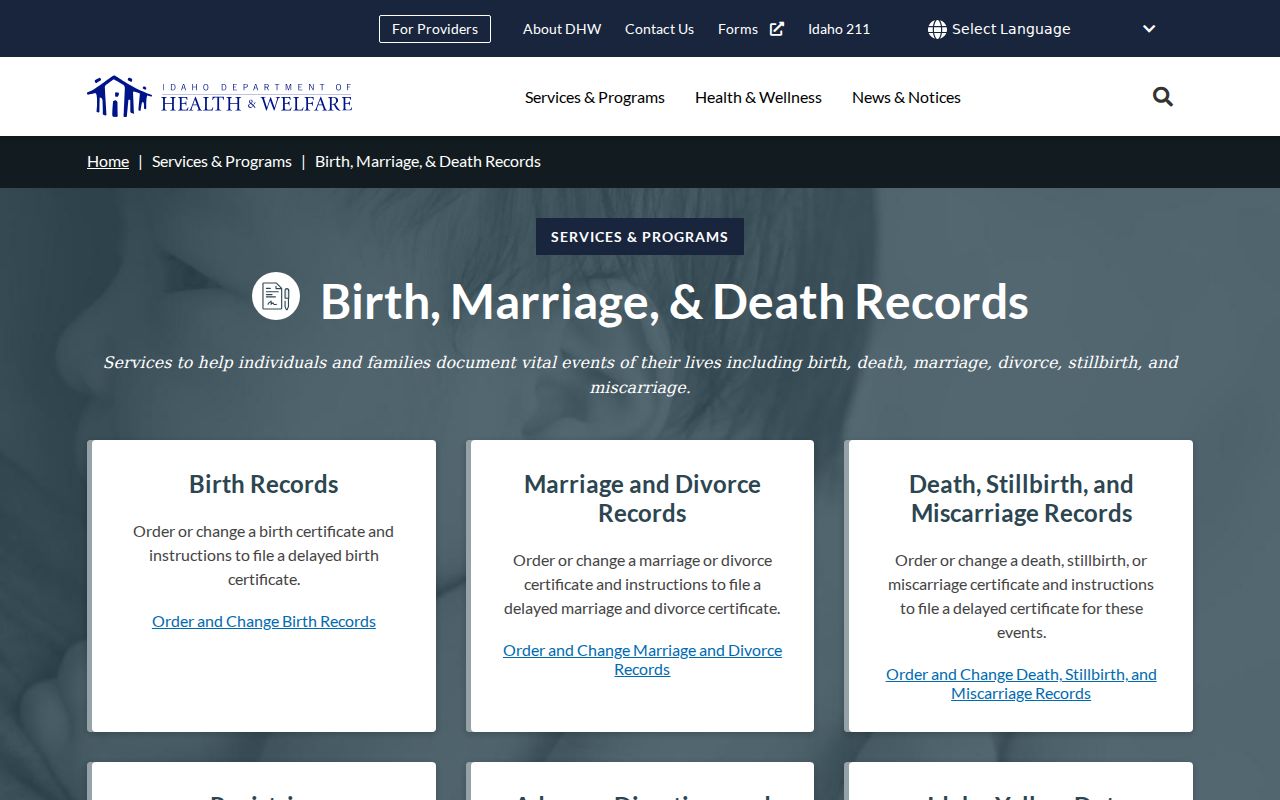
The official page sorts requests by record type, and it keeps eligibility checks separate from public archive work.
Idaho Falls Cemetery Directory
Rose Hill and Fielding Memorial stand out among city-held sources. The Idaho Falls Cemeteries page counts more than 25,000 headstones. It also logs over 150 burials a year. City Code draws a line between burial records and cemetery ownership or transfer files. A plot purchaser is not always the person buried there.
The online database changes often, so its field labels may shift. If a lookup stalls, call Rose Hill, Fielding, Parks, or the City Clerk. Ask for the deceased name, burial date, and age if known. Request the section or plot and any separate ownership record. Newspapers and death indexes can then confirm the burial belongs to the person sought. Use the city cemetery source and its contacts before searching.
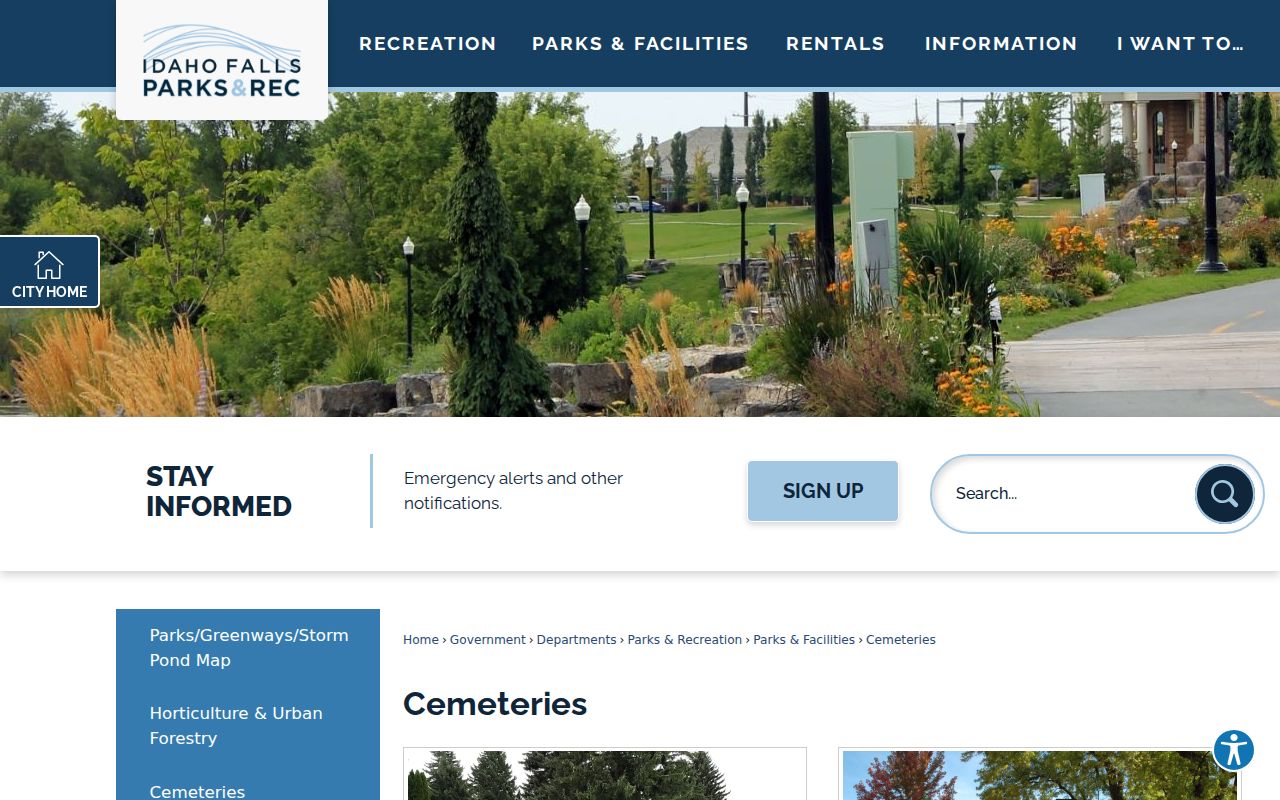
The city gateway provides the official path for database and staff-assisted burial research.
Current Idaho Falls Directory Sources
No single current source lists every Idaho Falls household. Each official roll covers one relationship, whether property ownership, voter registration, recorded instruments, city business, or a court case. Pick the narrowest roll that answers your question. Then compare it against an independent, dated record from the residents directory trail.
| Official source | People represented | Keeper | Access path |
|---|---|---|---|
| Assessment roll | Owners in tax context | County Assessor | Free viewer |
| Vote Idaho | Limited voter fields | Elections / SOS | Official lookup |
| Recorder index | Instrument parties | County Recorder | Free index; paid copies |
| iCourt | Public case parties | Idaho courts | Portal and clerk |
| Cemetery files | Burials and plot interests | City Parks / Clerk | Database and staff |
Official rolls give residents a known custodian and a clear path to an underlying file. Commercial people-finder listings can blend old addresses, relatives, and phones into one profile. They rarely show a source date. Treat them, at most, as unverified leads. Then go back to the original custodian for the record itself.
Maps Behind Idaho Falls Records
The City Maps page gathers street, parcel, address, subdivision, zoning, and historic-aerial resources. They all appear in one place. The aerial series reaches back to 1954. The city cautions that imagery before 2000 runs less accurate. County GIS began in the mid-1980s as an emergency road network. It later expanded into property, election, zoning, school, and court context.
That history explains both the strength and the limit of a map. GIS can locate a parcel or show whether it touches a city boundary. It cannot rebuild old title, occupancy, or an easement. Save the layer name, date, extent, and parcel ID whenever you use a map. Then verify legal facts through a deed or plat. A nearby road or matching shape never establishes a legal parcel line. When identifiers conflict, ask Mapping for help. Open the Idaho Falls City Clerk records gateway. It routes map-related records to the right department.
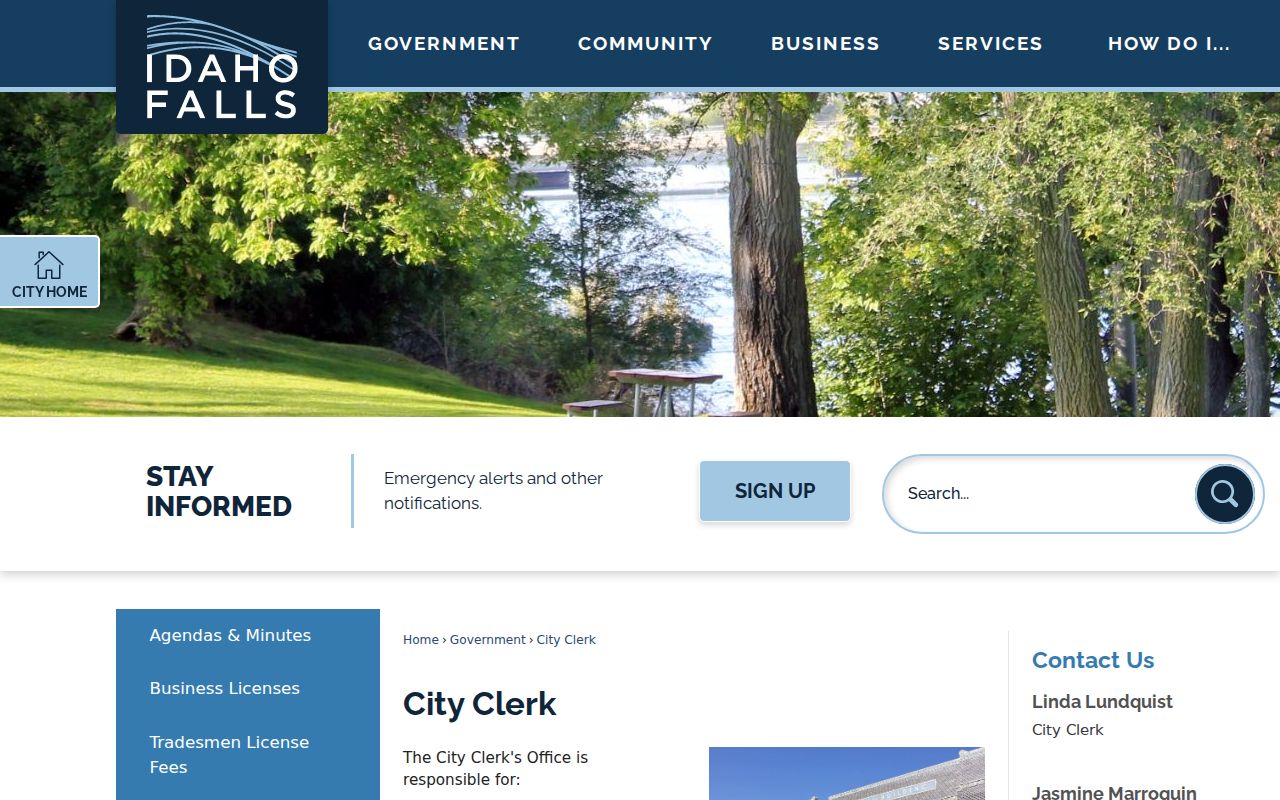
The municipal gateway shown here routes map-related requests and other city-held records to the right department.
Historic Idaho Falls Resident Rolls
The Idaho State Historical Society holds Idaho Falls directory reels from 1907 through 1971. Later shelf and Polk leads reach toward 2000. Idaho Falls Public Library offers catalog help, Digital Sanborn access, and public computers. BYU-Idaho archives keeps local microfilm. FamilySearch describes Bonneville County images spanning 1867 through 2012.
Treat a directory as a year snapshot, never as title proof. Search both Eagle Rock and Idaho Falls for early residents. Before 1911, check Bingham County too. A printed address gains weight when paired with a deed, newspaper, census, cemetery record, or Sanborn map. Keep the reel, year, page, and the spelling exactly as printed. Another researcher should be able to repeat the work.
- Roll
- A list kept for one official function.
- Index
- A finding aid pointing to the underlying file.
- Criss-cross directory
- A volume arranged by street or phone number.
- Parcel
- A mapped unit of land with its own identifier.
An Idaho Falls residents directory trail holds up best when the record role, year, location, and original identifier all agree. Label empty results as outside coverage, sealed, confidential, image restricted, or not indexed. A blank is never proof that no record exists.