
Idaho Falls Directory Years
The most exact inventory comes from the Idaho State Historical Society's Reference Series 445 finding aid. It lists both film reels and shelf copies. The early books can cover the city and nearby counties, while later runs may include Bonneville County, Ammon, rural households, or taxpayers. Treat each edition as a dated snapshot. A listed year does not mean a volume is online, on the open shelf, or ready to view without notice.
| Directory group | Years represented | Repository | Access route |
|---|---|---|---|
| Early city and regional reels | 1907-08 through 1926 | Idaho State Historical Society | Reels 1 and archive request |
| Mid-century reels | 1928 through 1952 | Idaho State Historical Society | Reel 2 and shelf copies |
| Annual and near-annual reels | 1956 through 1971 | Idaho State Historical Society | Reels 3 through 6 |
| Later shelf holdings | 1970-74, 1976-87, 1990-92 | Idaho State Historical Society | Confirm volume and section before visiting |
| Polk microfilm | 1911-1917 | BYU-Idaho Special Collections | Local microfilm collection |
| FamilySearch Books metadata | 1908, 1978, 1998-2000 | FamilySearch | Online, protected, or search-only by item |
There are gaps. The shelf list adds 1954 and many years after 1971, but it is not a promise of a complete annual run. Ask whether the chosen Idaho Falls city directory has a surname list, street section, reverse section, or classified business pages. Save its year, publisher, reel or shelf mark, and page number.
Idaho Falls Directories at ISHS
The Idaho State Historical Society Research Center is the main physical stop for the long Idaho Falls directory run. It is open Wednesday through Saturday from 10:00 a.m. to 4:30 p.m., and staff recommend an appointment 48 hours ahead. Email public.archives@ishs.idaho.gov with the city, year, and reel or shelf group. Ask about a reader, scans, and any rules for taking reference photographs.
The archive also holds microfilmed newspapers, fire maps, blueprints, manuscripts, government records, photographs, oral histories, and Idaho yearbooks from 1909 through 2006. Those sources help test an entry. A business address may match a classified listing, a family move may appear in a newspaper notice, and a school yearbook may distinguish two people with the same name.
The ISHS archive page shows the research center and its access options.
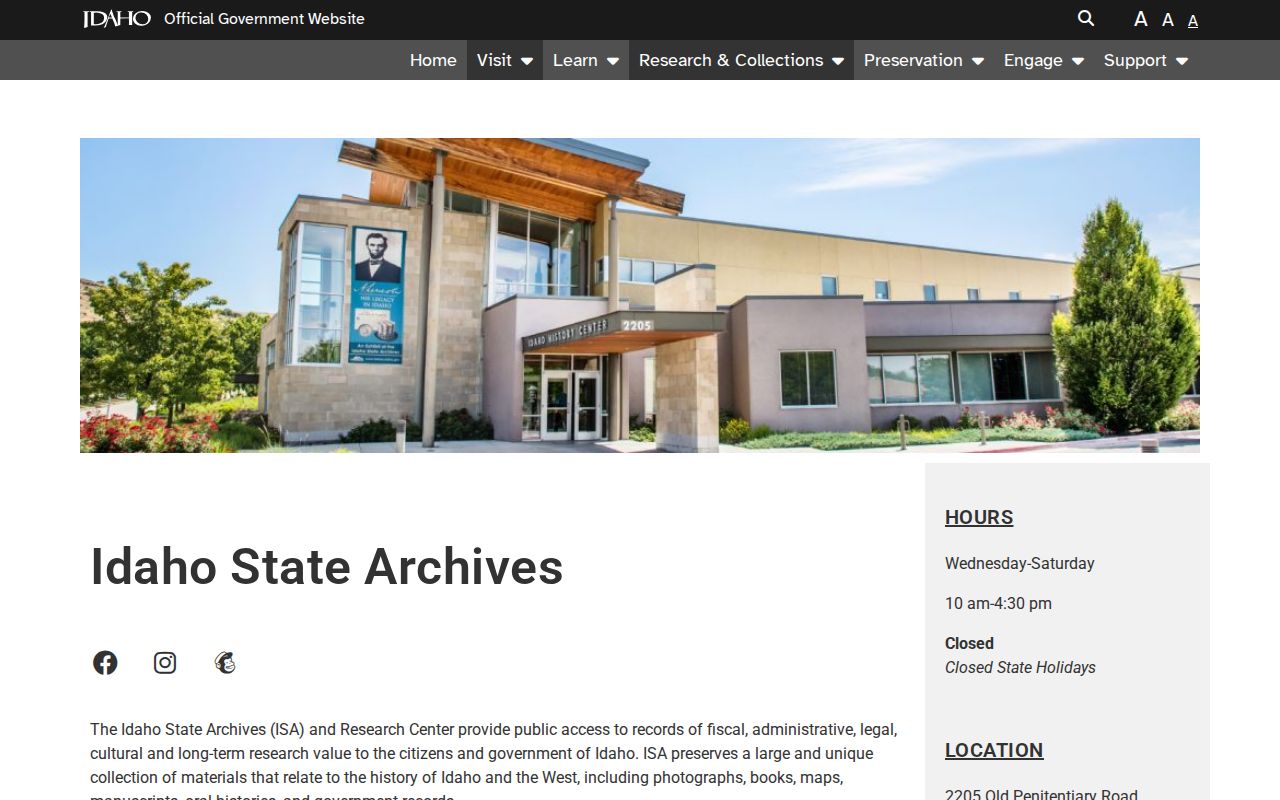
This archive route matters because most volumes listed in the finding aid are not presented as a free, page-by-page web collection.
Idaho Falls Library Directory Access
The Idaho Falls Public Library Digital Library offers Digital Sanborn Maps, EBSCO, and History Reference Center. Its public pages do not state exact local city directory, telephone-book, reverse-directory, or obituary-index years. Search the library catalog, then call 208-612-8460 and ask for the precise year and format. The library is at 457 W Broadway and has public computers while it is open.
Cardholders may use public computers for up to four hours a day. Guests with photo identification receive up to 60 minutes, first-come. That makes the library a useful access point for subscription maps and databases even when it does not hold the printed book itself. Staff can also help frame an archive or interlibrary request.
The Idaho Falls digital library page identifies the available history databases.
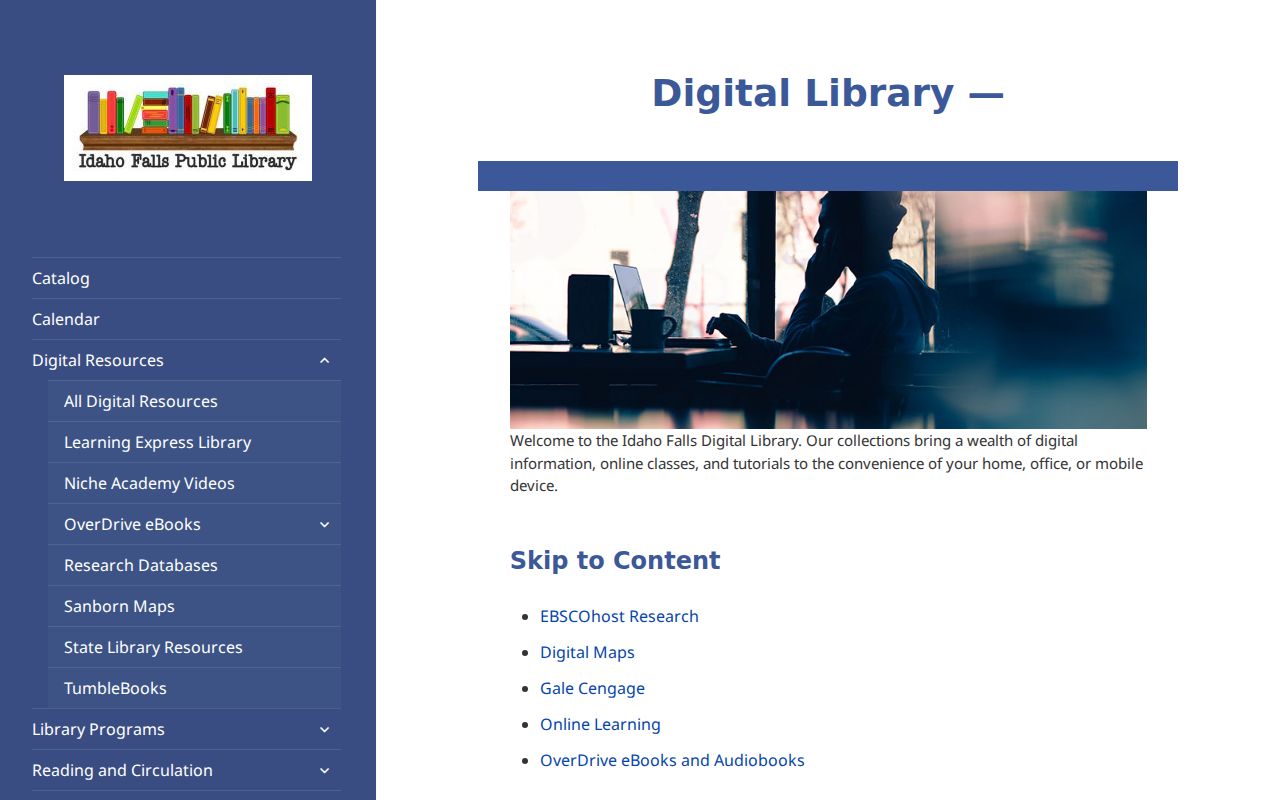
The screen is a gateway, not an inventory of local directory years, so confirm the title before relying on it.
Note: Ask specifically for street or reverse sections, since the public catalog does not confirm which Idaho Falls volumes contain them.
Decode an Idaho Falls Directory
An Idaho Falls city directory entry is evidence for one publication year. Read the legend first because publishers changed symbols and abbreviations. The line may identify a person, spouse, line of work, employer, business role, and residence. It may also use short forms that are easy to mistake for part of a name or address. Do not infer ownership from an address line. Compare it with a recorded deed if ownership matters.
| Personal name | Usually the alphabetized entry; initials and spelling can vary by year. |
|---|---|
| Household detail | A spouse or widow notation may connect family members. |
| Work or business | An occupation, employer, or business role helps separate same-name people. |
| Residence | The printed house number and street belong to that edition's date and naming system. |
| Publisher marks | Symbols may distinguish an owner, renter, boarder, or business, but only if the volume's key says so. |
- Criss-cross directory
- A later directory section arranged by street and house number instead of surname.
- Householder index
- A list centered on household heads or occupants, with coverage defined by that volume.
- Abbreviation key
- The publisher's guide to short forms and symbols. Photograph or cite it with the entry.
Eagle Rock Directory Search Pivot
Early Idaho Falls research needs a second place name. Eagle Rock was incorporated in 1889 and became the Village of Idaho Falls in 1891. The city later became a town in 1898 and a second-class city in 1900. For an event before or near the name change, search Eagle Rock as well as Idaho Falls in directories, catalogs, land records, and newspapers.
Jurisdiction changed too. Bonneville County was created from Bingham County in 1911. A person can appear in a regional directory labeled with Bingham, Bonneville, Fremont, or another nearby county without the entry being wrong. For records before 1911, Bingham County books and indexes may hold the trail. The current Bonneville Recorder portal begins its displayed index in 1911.
| 1889 | Eagle Rock incorporated. |
|---|---|
| 1891 | The place name changed to Idaho Falls. |
| 1907-08 | First listed Idaho Falls City & Vicinity directory run in the ISHS finding aid. |
| 1911 | Bonneville County formed and the regional record path shifted. |
| 1971 | Last year in the six-reel sequence, with later shelf volumes still listed. |
More Idaho Falls Directory Shelves
BYU-Idaho Special Collections lists Polk city-directory microfilm for Idaho Falls from 1911 through 1917. This is a focused fallback when a trip to Boise is not practical. Its death index can then test a family-history hypothesis by first name, last name, county, city, dates, and certificate number.
FamilySearch's catalog accepts place, keyword, title, author, subject, surname, and call number searches, with an online-availability filter. A free login may be needed, and some images can be viewed only at a FamilySearch center. The Idaho Falls FamilySearch Center at 750 W Elva Street offers help, classes, and digitization equipment; call 208-524-5291 for current access.
The BYU-Idaho local microfilm page identifies the focused directory run.
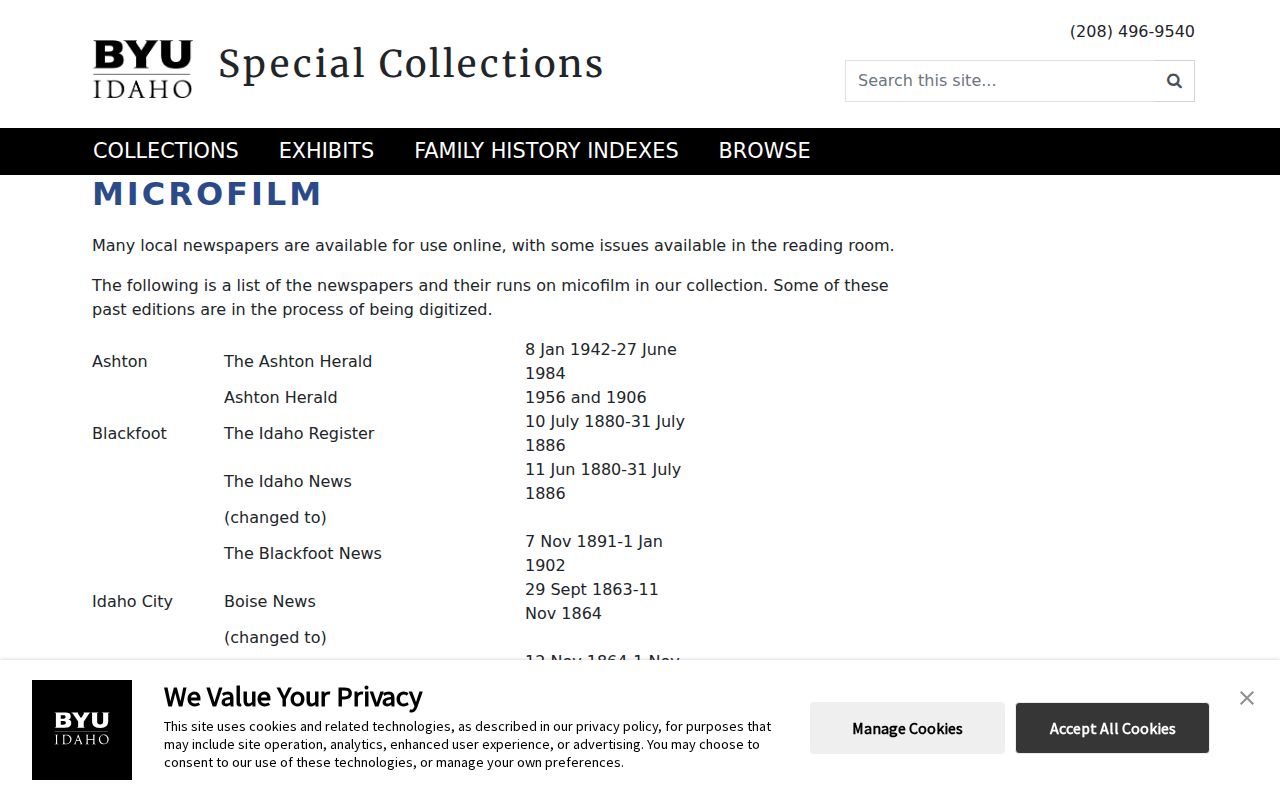
That named 1911-1917 run fills a clear access role alongside the longer ISHS inventory.
Test Idaho Falls Directory Clues
Pair a directory line with a source made for a different purpose. The Idaho Falls Times covers 1890 through 1920 in Library of Congress metadata. Search initials, full names, the street, a business, Eagle Rock, and Bonneville. Optical character recognition can miss old type, so repeat short forms and browse the issue around a known date.
Maps test the address, not the resident. The Library of Congress has Idaho Falls Sanborn editions dated 1900, 1911, and 1921. Sheets can show street names, building footprints, materials, height, use, and outbuildings. A blank sheet is not proof that no structure stood there because the lot may fall outside the mapped area. The city historic aerial viewer begins in 1954, though pre-2000 imagery carries an accuracy warning.
Trace Idaho Falls Families Yearly
City directories bridge the long gaps between federal census years. The 1950 Census is the latest released decennial schedule under the 72-year rule. Most of the 1890 federal census was lost, so Idaho State Historical Society's reconstructed 1890 index is a useful substitute lead for roughly 1885 through 1894. It draws on land, tax, court, vital, will, mining, water-rights, and naturalization sources rather than an intact census schedule.
- Find the earliest firm name and address match in an Idaho Falls city directory. Save the edition, page, printed spelling, and all abbreviations.
- Move to the next available volume. Track the residence, spouse, work, and business line without filling missing years by assumption.
- Ask whether that edition has a street or reverse section. Use it to check the address and nearby household names.
- Pair directory dates with the closest released census, newspaper, deed, cemetery record, or yearbook.
- Mark a disappearance as unresolved until a move, death, name variant, omitted edition, or restricted source explains it.
This method preserves uncertainty. One exact name plus a dated address is stronger than a name alone, while a spouse, event, parcel, or business adds another independent match.
Idaho Falls Directory Versus Deed
A directory answers who was listed at an address. A deed records a legal property act between named parties. To compare them, use the Bonneville County Official Records Search by grantor, grantee, parcel, situs, instrument, or book and page. For pre-1995 material, heed the portal warning not to rely on recording-date searches alone.
The sources may disagree for sound reasons. An occupant may rent, an owner may live elsewhere, an estate or trust may hold title, and a directory date may lag a move. The Idaho Falls by-street resource handles the modern address and parcel path. Keep the historical shelf separate from the current ownership task.
Archive tip. Preserve the directory year, page, reel, printed address, deed instrument, and retrieval date so another researcher can repeat the match.
When Idaho Falls Names Vanish
A missing name does not prove a person left Idaho Falls. The year may be absent, the edition may cover a different region, the resident may be unlisted, or the surname may be misspelled. Married names, initials, household-head conventions, rural routes, and business entries create more gaps. Search the address, spouse, employer, nearby years, and both Eagle Rock and Idaho Falls when the date warrants it.
If online access fails, follow the full fallback chain: call the Idaho Falls Public Library catalog desk, contact BYU-Idaho Special Collections, request the reel from ISHS, use a FamilySearch center, browse Library of Congress maps and newspapers, and ask the Bonneville Recorder for an indexed copy by mail or at the courthouse. Label the result accurately as not located, not indexed, outside coverage, or access restricted.